Archive


There are various decisions to consider before purchasing a new appliance, such as price, brand, size and colour. However, energy efficiency is on the trend and it has become an important factor. Not only you will gain significant cost savings in the long run but it will also help reduce your carbon footprint.

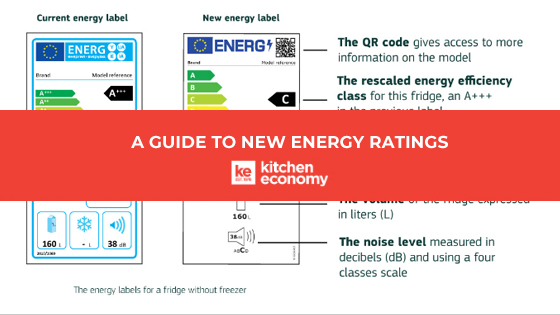
As of 1st March 2021, the energy label rating system will use A to G rankings only instead of A+++ to D ratings as before. This new rating system applies to the following product groups:

Why Is This Change Happening?

Due to the development of more and more energy efficient products in the market which has resulted in making labels such as A++ and A+++ less obvious to the consumer, the EU energy label will enable consumers to distinguish clearly between the most energy efficient products.

What’s New?

  • QR Code - Providing instant access to product information
  • New Energy Classes - A simple A-G energy classification system
  • Simpler Consumption Usage - An easier way to understand energy consumption measurements

Category Specific Labels

Fridges & Freezers

Half of domestic refrigeration appliances placed on the market in 2014 could claim one of the top two energy ratings (A++ or A+++).

How will the changes help?

  • Fairer Rules - Which will be enforced through more realistic calculations.
  • Energy Saving - 10TWh of electricity per year by 2030.
  • Household Savings - European households will save an average of €100 in electricity over the lifetime of their new fridge or freezer.

Washing Machines & Washer Dryers

More than 55% of washing machines placed on the EU market are ranked A+++ on the label, hindering product differentiation.

How the changes will help?

  • Fairer Rules - Will be enforced through more realistic calculations.
  • Water Saving - 711 million m3 of water saved by 2030
  • Energy Saving - 2.5 TWh of electricity savings per year by 2030.
  • Household Savings - European households will avoid an average of €130 of electricity expenditure over the lifetime of their new washing machine.

Dishwashers

More than 60% of dishwashers placed on the EU market ranked A+++ or A++ on the label, making it difficult to differentiate between products.

How will the changes help?

  • Fairer Rules - Which will be enforced through more realistic calculations.
  • Water Saving - 16 million m3 of water by 2030.
  • Energy Saving - 2.1TWh of electricity per year by 2030.
  • Household Savings - European households will save an average of €60 in electricity over the lifetime of their new dishwasher.

Choosing the right vacuum cleaner for your home is important to make sure you keep your home fresh and clean in the quickest way possible.

From cleaning up dirt to removing pet hair and sucking up dust, this guide will help you find the ideal model for your needs.

TYPES

Before making the purchase, you’ll need to choose whether you want a cylinder, an Upright or a stick vacuum cleaner. This will depend on the type of cleaning you do and how much coverage you’ll need.

Cylinders

The traditional vacuum design, ideal for cleaning hard floors, stairs and upholstery. Cylinder cleaners consist of a main tank and long suction hose. They are neat and compact for navigating smaller rooms and don’t need much storage space.

Upright

Upright models are a great option for larger homes because of their bigger cleaning capacities and powerful suction power. This type of vacuum is perfect if you live in a home with large areas of carpet or if you have pet because it provides a much deeper clean.

Stick

Stick models are usually lightweight and can convert into handheld cleaners. These usually come cordless but corded models are also available. They offer excellent convenience because of their canisters that can be regularly emptied. This type is ideal if you need to quickly clean up a mess and picking up pet hair.

CORDED OR CORDLESS

The second choice you have to make is whether you want a corded or cordless vacuum cleaner. This will depend on the size of your home and the type of cleaning you’ll be frequently doing.

The primary difference between the two is that cordless models run on battery, meaning your cleaning time is limited between 15 minutes to one hour depending on which model you buy.

Corded

Corded vacuums tend to be more powerful which means they are better for picking up dust and have a much greater dust capacity, so you won’t have to empty the bag as regularly.

Cordless

Cordless models are designed to be much lighter than corded vacuums. This makes it convenient to navigate around the home without having to switch plugs when moving into a different room.

BAGGED OR BAGLESS

Once you decide the best type, you’ll also have to think about choosing between a bagged or bagless cleaner. This will depend if your household suffers with any allergies and the amount of cleaning you’ll taking on.

Bagged

Bagged vacuum cleaners are ideal if you have allergies or asthma as this reduces the amount of dust and allergens you’re exposed to. They also have a much higher capacity, however bagged cleaners do have an extra added cost of having to buy replacement bags once it’s full.

Bagless

Bagless models are an ideal choice if you want convenience. The dust and dirt are collected into a container, which can be simply removed and empty once it’s full. They are much better for tackling pet hair and there’s also no need to purchase additional bags.

TYPES OF FILTERS

Another feature to consider is the type of filter that suits your needs. Choosing the right filter is important because vacuum cleaners sucks up the air containing dust particles which are then filtered to be expelled back into the room. The better the filter the cleaner the air in your home will be.

Stage Filters

These vary between 3 and 7 stages of filtration. The higher the number of stages the cleaner the air will be during cleaning.

High Efficiency Particulate Air (HEPA)

Also known as S-Class these are ideal if you or your household suffer with asthma or allergies as they are able to collect even the smallest of allergy-causing particles. Some models are even approved by the British Allergy Foundation.

Charcoal

Charcoal filters remove any horrid smells that are lingering. This type of filter is excellent if you have pets at home.

Liftime Filter

For the perfect convenience, these filters don’t need to be changed during the lifetime of the machine which is normally between 7 – 10 years, but will still need maintenance and washing occasionally.


ATTACHMENTS

Before making a decision on purchasing vacuum cleaners, you need to make sure you’re choosing the best cleaning tools for your home. Most models come with basic cleaning tools that works across most floor types and others come with a range of attachments for a more specialised type of cleaning.

Crevice Tool

A handy skinny tool with an angled grip that is great for vacuuming tight spots, skirting boards, radiators and in between sofa cushions.

Upholstery Brush

Made with a wide tool with a lint strip this attachment is ideal for cleaning sofas, curtains and cushions.

Dusting Brush

Designed with a soft bristle brush this tool is great for cleaning window sills, lampshades, keyboards and shelving.

Extendable Tube

This attachment provides you with an extra lenght to tackle hard to reach areas around your home and high ceilings.

Turbo Brush

Perfect for sucking up pet hair, lint and fibres from sofa this tool offers extra cleaning power with its rotating brush to lift and beat your carpet or fabric as you vacuum.

Parquet Brush

This tool is a must have if you have many hard floors in your home such as parquet, laminate, polished stone and high quality tiles.

FAQs

Vacuum cleaners designs are constantly changing and with a wide variety models in the market to choose from it can get very confusing and you might have some questions. Here are just a few of the most common questions you might have answered.

Which are the lightest Vacuums?

Typically, the most light weight vacuum type is cordless because it does not have a heavy motor like traditional vacuums. However, you will find uprights and cylinders also weighing under 5kg.

How do I empty my vacuum cleaner?

This can vary on whether you have a bagged or bagless vacuum cleaner. Bagged models keep all debris contained inside the bag and need to be disposed of and replaced when full. Bagless models can usually be emptied hygienically with a simple touch of a button.

Which vacuums are best if you suffer with allergies?

If you suffer with allergies then vacuums fitted with HEPA filter will remove 99.97% of particles from the air including pollens and mould spores.

How do I take care my vacuum cleaner?

There are various way to keep your vacuum cleaner in good shape and here our top recommendations:

  • Clean filters regularly; blocked filters and blocked brush heads will affect the appliance performance, as will over-full bag or containers.
  • Be careful of what type of materials you’re vacuuming; liquid, sticky materials and small sharp objects can jam your cleaner’s motor.
  • Make sure the bag is properly attached before you do your cleaning as it could end up filling the inside of your vacuum instead of the bag.
  • Empty bagless models regularly by looking at the marker or indicator when its full, don’t let dirt settle within the unit.


Microwaves are now one of the most versatile kitchen appliances you can have in your home. From heating up leftovers to cooking your favourite vegetables to defrosting meat, there are a few things to consider when choosing the ideal microwave for you. 

Whether you’re a busy body that solely relies on using your microwave or an avid cook that only uses it on occasion or for specific tasks, we’ll be able to find the right appliance for you.

TYPES

The primary choice you have to make is whether you want a standard solo, a microwave with a grill or a combination microwave. This will depend on what you cook and your needs, as some people depend solely on this appliance whilst others use it only on occasion or for a particular task.

Standard Solo

If you’re looking for a microwave with all the standard functions then a solo microwave is the perfect choice. They’re ideal for day to day simple tasks such as reheating meals and drinks or quickly defrosting food.

Microwaves with a Grill

Providing a two in one function these types of microwave are equipped with a grill. They can do everything a solo microwave can do along with a grill option. They’re a must have if you love crisping up or browning your food. 

Combination Microwaves

When you want your microwave to be completely flexible, then combination microwaves will do the job. This is because they offer all the features of the other models as well as providing convection heating, which is great for baking cakes and variety of dishes.


INSTALLATION

The second choice you’ll have to make is whether you want a freestanding or an integrated microwave. This will depend on your kitchen interior design.

Freestanding

Freestanding or also known as standard microwaves are the most popular as they offer flexibility when placing them around your kitchen. They’re also easy to move if you’re moving home or rearranging your kitchen.

Integrated

These are designed to fitted into your kitchen units and usually require professional installation. This is a perfect option if you want an integrated look to create a seamless finish.

CAPACITY

Microwaves are available in various size ranges. The larger your family size the larger your microwave should be. This will also depend on how much you cook with it and the extra features you may want.

Compact

This is the standard microwave and its capacity is usually between 15 to 20 litres. This is ideal if there’s between two and four people in your household that primarily use the appliance for reheating and melting.

Mid-Size

An upgrade from the typical standard microwave size with a capacity between 21 to 25 litres, you’ll be able to find grill and combination microwaves in this collection. The extra added capacity will easily handle two to four person households whilst also allowing for extra space for more flexible uses and larger sized foods.

Family Size

With capacities between 26 to 30 litres you’ll have more than enough space to cover four to six people in one home. These are usually solo microwave models at this size and they offer plenty of space to reheat large meals or several beverages at once.

Full Size

If you have a large family size that are into various styles of cooking then full size microwaves are the one for you. At this size you’ll find models with a grill and combination microwaves that have capacities ranging from 32 litres and above.

FEATURES

Once you’ve decided on the type, installation and size of your microwave, it’s now time to find the right features to consider. It can be confusing at first and you may not need all of them but here are a few to look out for.

Wattage

Typically measured in watts, microwave power ranges from 800 to 1200W. This is very important as this determines the speed of items to be cooked or heated. The higher the wattage the faster your food will cook.

Pre-set Programmes

If you’re unsure how long certain foods should be in microwave for, then models with pre-set programmes are ideal for you. Providing extra convenience, the programmes gets rid of the guesswork of timings for popular foods, along with reheating and defrosting.

Sensor Cooking

If you’re tired of inconsistent cooking results then the sensor cooking feature is a must have for you. It automatically adjusts the power levels and cooking time by measuring the moisture in food along with the microwaves interior humidity, so you’ll have flawless results every time.

Easy Clean Linings

Microwaves can get pretty messy especially with constant day to day use; that’s why easy-cleaning linings are a critical feature to consider. Look for microwaves with catalytic or pyrolytic liners which are fitted on the interior walls for an easier cleaning experience. Theses liners are self-cleaning and absorb dirt and grease from food to keep your appliance spotless.

Style

All these features are handy but what’s the point if your microwave doesn’t fit the look and style of your kitchen. Lucky for you, microwaves come in various designs and colours, from ultra-modern to retro style, there’s a microwave for every kitchen.

Defrost

The days panicking when you’ve accidentally forgotten to defrost your food items are gone. Modern microwaves are now equipped with a defrost function so you can get cooking quickly without having to wait around for frozen items to thaw out.

MICROWAVE FAQs

Microwaves have been around for a long time however there are still wide variety of questions that we still get asked. Here are just a few of the most common.

How does a microwave work?

Microwave ovens sends out waves of energy called ‘radiation’. These microwaves hit the water inside your food and make it vibrate which produces heat that cooks the food.

Are microwave ovens dangerous?

Modern microwaves ovens are designed to allow essentially no leakage of microwave. The only time for concern would if the door is broken or damaged, in which case the oven should not be used.

How long do microwaves last for?

With normal use an average microwave lasts about seven years, and even less with heavy use and poor maintenance. The lifespan can be shortened even further if the wrong items are placed inside which may cause irreparable damage.

How do I take care of my microwave?

There's various ways to keep your microwave in good shape and here are our top recommendations:

  • Only use microwave safe containers and tableware.
  • Don’t operate your microwave when it’s empty; the microwaves will bounce off the interior which may cause damage to the appliance.
  • Keep your microwave clean to prevent damage to the interior caused by burned foods.
  • If you have a ‘solo’ microwave, make sure it’s positioned to allow airflow around it.
  • Use the provided pre-set cooking times which helps the microwave work more efficiently and saves you energy.